

Introduction
As a data and AI-led organization, innovation is central to EXL’s strategy and long-term success. We operate in diverse markets and serve clients across industries, and we believe that diversity of thought, experience, and perspective strengthens our ability to solve complex problems and deliver better outcomes.
Our inclusion and belonging efforts reflect our commitment to attracting and developing the best talent, regardless of background or location, while fostering an environment where everyone feels valued, respected, and able to contribute fully.
Guided by our belief that data drives progress, we are pleased to share our UK Gender Pay Gap figures for the Third consecutive year. Transparency and measurement are essential to understanding where we stand today and tracking progress over time.
While gender pay gaps can reflect broader industry and structural factors, we remain committed to using data insights to guide meaningful action. Alongside our UK reporting, we continue to advance global initiatives focused on representation, career development, and creating equitable opportunities across our workforce.
Inclusion is both a business imperative and a human commitment. We are embedding it into how we lead, collaborate, and grow, through inclusive leadership, psychological safety, equitable career opportunities, accessibility, and pay equity. We measure what matters, stay accountable, and continuously raise the bar.
- Pamela Harrison
Executive Vice President & Chief Human Resources Officer

What is gender pay gap?
The gender pay gap measures the difference in average hourly earnings between men and women across all roles in an organization, regardless of job level or function. It reflects the distribution of men and women across different roles and seniority levels within the workforce. The gender pay gap is different from equal pay, which refers to men and women receiving the same pay for performing the same or equivalent work.
Our Gender Pay Gap report has been calculated in accordance with the UK regulations (published on the 22 February 2017), requiring organizations with 250 or more employees to report their gender pay gap. The data reflected in this report was collected in April 2025.
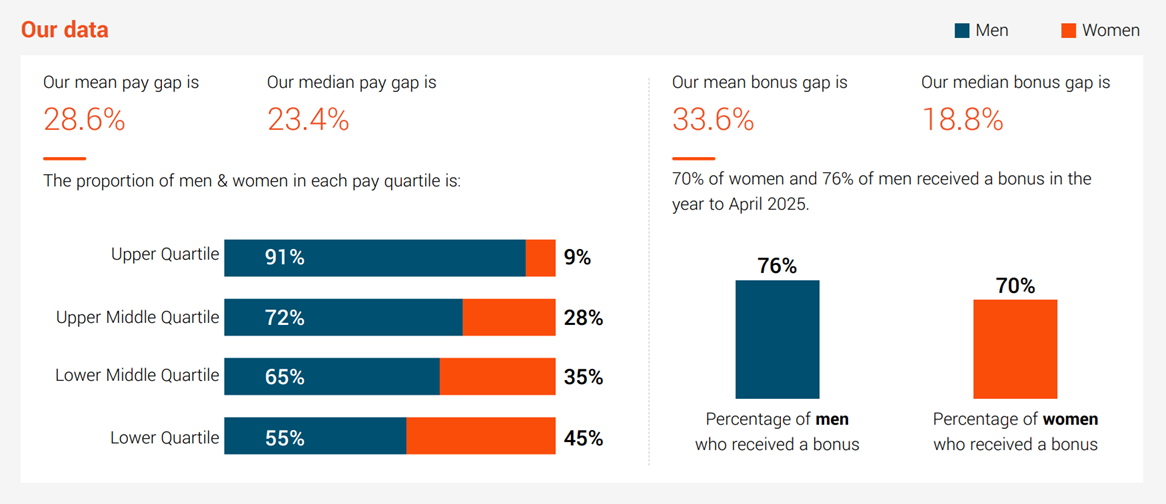
We will have annual updates on Gender Pay Gaps and our progress toward closing identified pay gaps.
Our action plan
We are committed to fostering a workplace where all employees, regardless of gender or other identities, can grow, thrive and achieve their full potential. We continue to identify and address potential bias and structural barriers that contribute to gender pay gaps, and we remain focused on making meaningful, sustainable progress over time. Encouragingly, we continue to see improvements in the representation of women across the organization, particularly in leadership roles. Increasing women representation in senior positions is a key factor in narrowing the gender pay gap. This progress is being made alongside increasing role complexity as we continue to advance our data, AI and domain-led strategy.
Our ongoing progress reflects targeted, system-level interventions designed to strengthen inclusive talent practices and support long-term improvement.
Inclusion and belonging strategy and governance:
- Our strategy is guided by the cross-functional Global Inclusion & Belonging Council, which provides oversight and reviews progress at regular intervals.
- We maintain strong partnerships with business leaders to closely monitor gaps in representation, pay, hiring, promotion and retention across demographic identities. This frequent cadence of review ensures identification of gaps, potential bias and corrective actions, reinforcing accountability at all levels.
Strengthened leadership hiring discipline
We have institutionalized a disciplined approach to leadership hiring (VP and above) to ensure broader, fairer and more competitive talent evaluation. This includes:
- Sourcing strategies to reach broader and more diverse talent pools beyond traditional sourcing channels.
- Leverage AI tools to support unbiased candidate shortlisting, allowing hiring teams to evaluate candidates solely based on their skills and experience.
- Applying consistent scrutiny to roles filled through internal referrals to mitigate potential bias.
These measures strengthen quality of hire, enhance long term business outcomes and support sustained improvement in leadership representation.
Sustained focus on pay equity
Equitable pay practices remain a critical enabler of our gender pay equity ambitions. We continue to enhance our pay equity analysis and regularly monitor compensation data to identify potential gaps. Where discrepancies are identified, we develop targeted actions to address them, ensuring fairness, transparency and consistency in pay practices. This sustained focus reinforces trust and strengthens our ability to attract, develop and retain leaders across all demographic identities.
Responsible Use of AI tools in recruitment
We continue to leverage AI enabled tools to support fairness and consistency in recruitment. These tools help ensure that job descriptions are inclusive and support objective candidate evaluation. These innovations support our broader objective of reducing bias in hiring and contributing to the elimination of gender pay gaps.
Building an inclusive, merit-based workplace
We are committed to fostering an inclusive workplace that reinforces a culture of meritocracy, recognizes and values differences, actively challenges bias and prejudice, and provides equal opportunity for growth and advancement. This foundation is essential in embedding bias-free talent management practices, ensuring long-term pay equity and preventing future gaps, particularly as leadership roles become more complex and specialized.
Women @EXL Employee Resource Group (ERG)
Our Women @ EXL Employee Resource Group plays an important role in strengthening internal talent pipelines through professional networking, mentorship, awareness initiatives and leadership development programs. These efforts support long term career progression and help build a strong, diverse pool of future leaders.
Specifically in the UK, we are focused on:
- Conducting regular pay equity reviews to identify and address any unjustified differences in pay or progression outcomes.
- Reviewing UK recruitment, promotion and performance practices to identify patterns or systemic factors that may impact talent and pay outcomes.
- Embedding accountability for integration of initiatives to debias hiring, retention, promotion and pay into UK business plans.
- Using targeted interventions to remove barriers to more balanced representations across senior and higher paid roles.
- Setting and monitoring clear UK inclusion and pay equity objectives, with regular reporting on progress and actions taken.
- Linking UK gender pay gap insights into wider equality action plans, in line with emerging expectations for larger employers.
The progress made during this reporting period reinforces that we are moving in the right direction, using the right levers, even as the challenge becomes more complex. We remain fully committed to achieving gender pay equity and creating a workplace where all employees have the opportunity to succeed today and in the future.