
The state of the UK energy debt crisis
£4.43B in total household energy debt as of Q2 2025, an increase of more than £750M year on year.
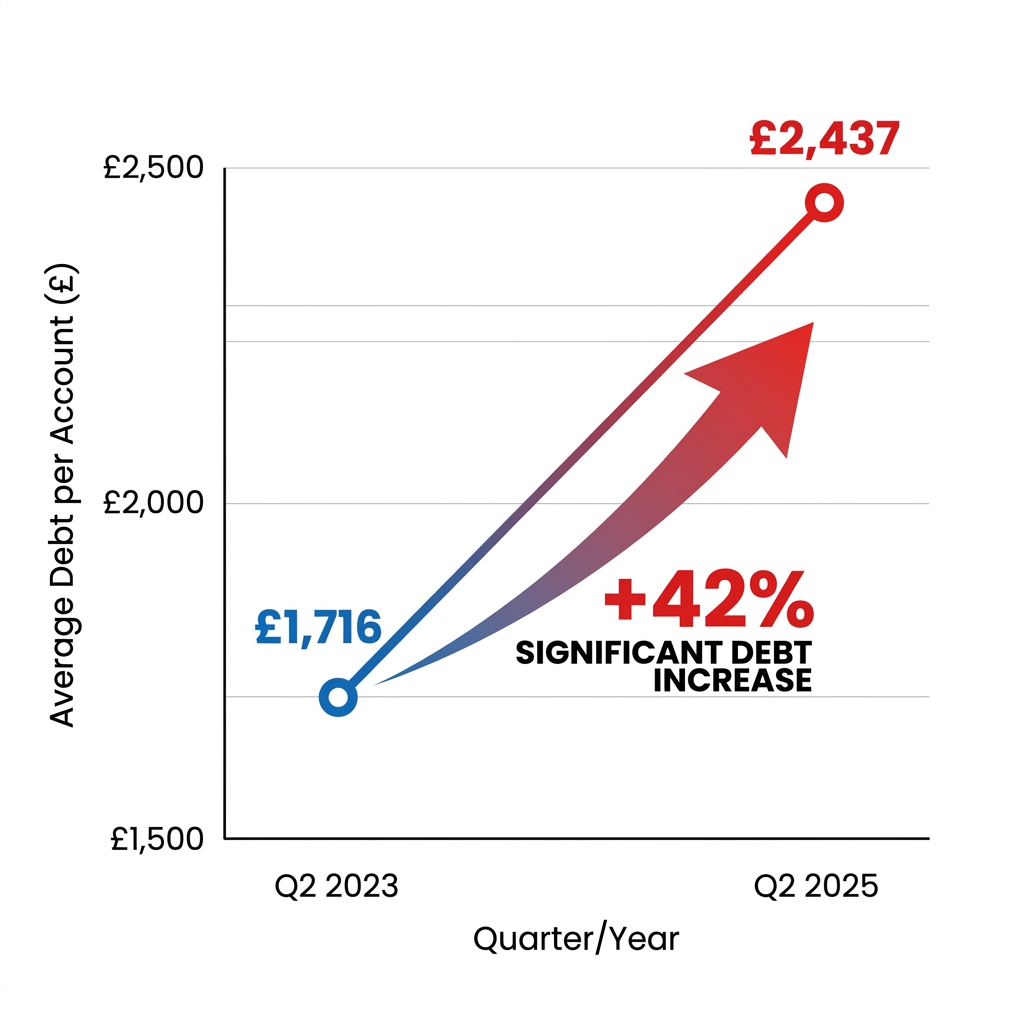
£2.9B is owed by 2M customers who lack a formal repayment arrangement, averaging £1,716 per account.
42% increase in the average debt per account since Q2 2023
6M+ UK households are now classified as living in fuel poverty.
66% of domestic meters in Great Britain are smart, with 67% operating in smart mode to facilitate early intervention.
UK household energy debt reached a record £4.43 billion in 2025, creating unprecedented pressure on utility suppliers. We partner with your organization to enable early intervention, protect vulnerable consumers, and improve recovery rates. Our strategic approach ensures compliance with Ofgem expectations and aligns with the principles of the Energy UK Vulnerability Commitment.
The structural challenge facing domestic suppliers
The data confirms a significant trend in the energy market. In Q2 2025, Ofgem reported that household energy debt reached £4.43 billion, an increase of over £750 million from the previous year. Of this total, £2.9 billion is attributed to 2 million customers without repayment arrangements. This equates to an average of £1,716 per account, a 42% rise since Q2 2023.
These figures represent a broader socioeconomic crisis, with over 6 million UK households now facing fuel poverty. Traditional, non-segmented collection methods are often insufficient for today's requirements. These legacy processes struggle to maintain a balance between effective debt recovery and the empathy required at this scale.
Five strategic pillars for AI-Driven Energy Debt Management
Preventing debt through early intervention
We utilize existing data sets to identify financial risk at the earliest possible stage. By March 2024, two-thirds of domestic meters in Great Britain were smart meters, providing essential live usage data. We show how AI-enabled behavioral scoring integrates this data with payment histories to flag potential issues during customer acquisition. This intelligent monitoring helps prevent bill shock and identifies fictitious debt early.
Implementing precision customer segmentation for Utility Debt Recovery
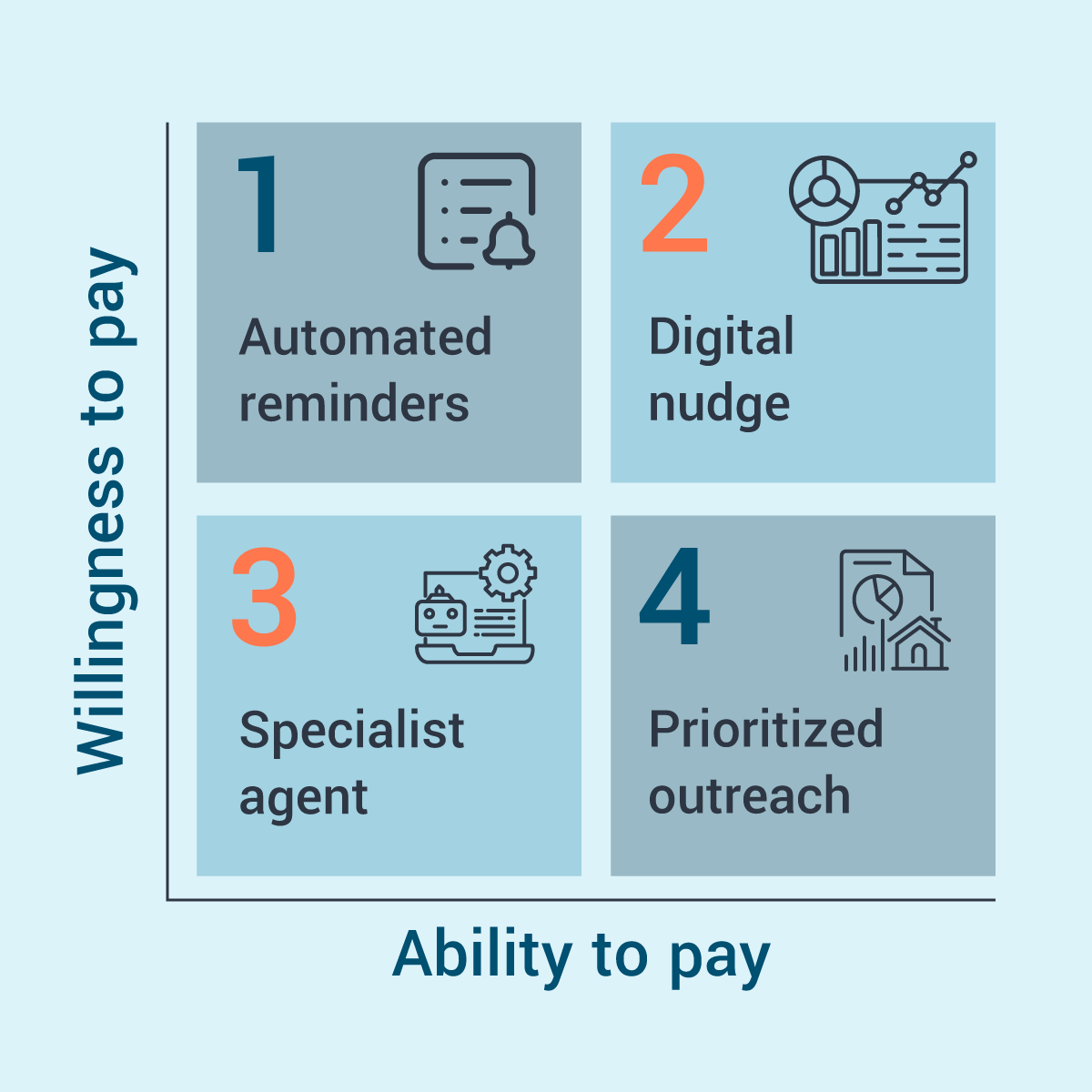
When a payment is missed, a targeted response is essential for successful recovery. We provide AI-driven segmentation that evaluates a customer's ability to pay, total balance, and historical contactability. This objective process matches every account to the most appropriate intervention. For instance, a customer who simply missed a deadline receives a digital reminder, while a household in genuine hardship is prioritized for a specialist agent.
Engaging Energy customers through dynamic omnichannel communication
Static dunning cycles often fail because customer behaviors vary. We outline how dynamic omnichannel journeys adjust the timing, channel, and messaging based on individual preferences. Our solutions leverage engagement data to deliver reminders when customers are most likely to respond, utilizing digital platforms to arrange payments without the need for traditional call queues.
Synchronizing organizational operations
Siloed data systems often prevent a comprehensive view of the customer. We demonstrate how workflow automation and a centralized customer record can automatically route billing disputes and vulnerability indicators to the correct internal teams. Our platforms help you transform fragmented data into decisive, coordinated action.
Recovering aged energy Debt with objective Judgment
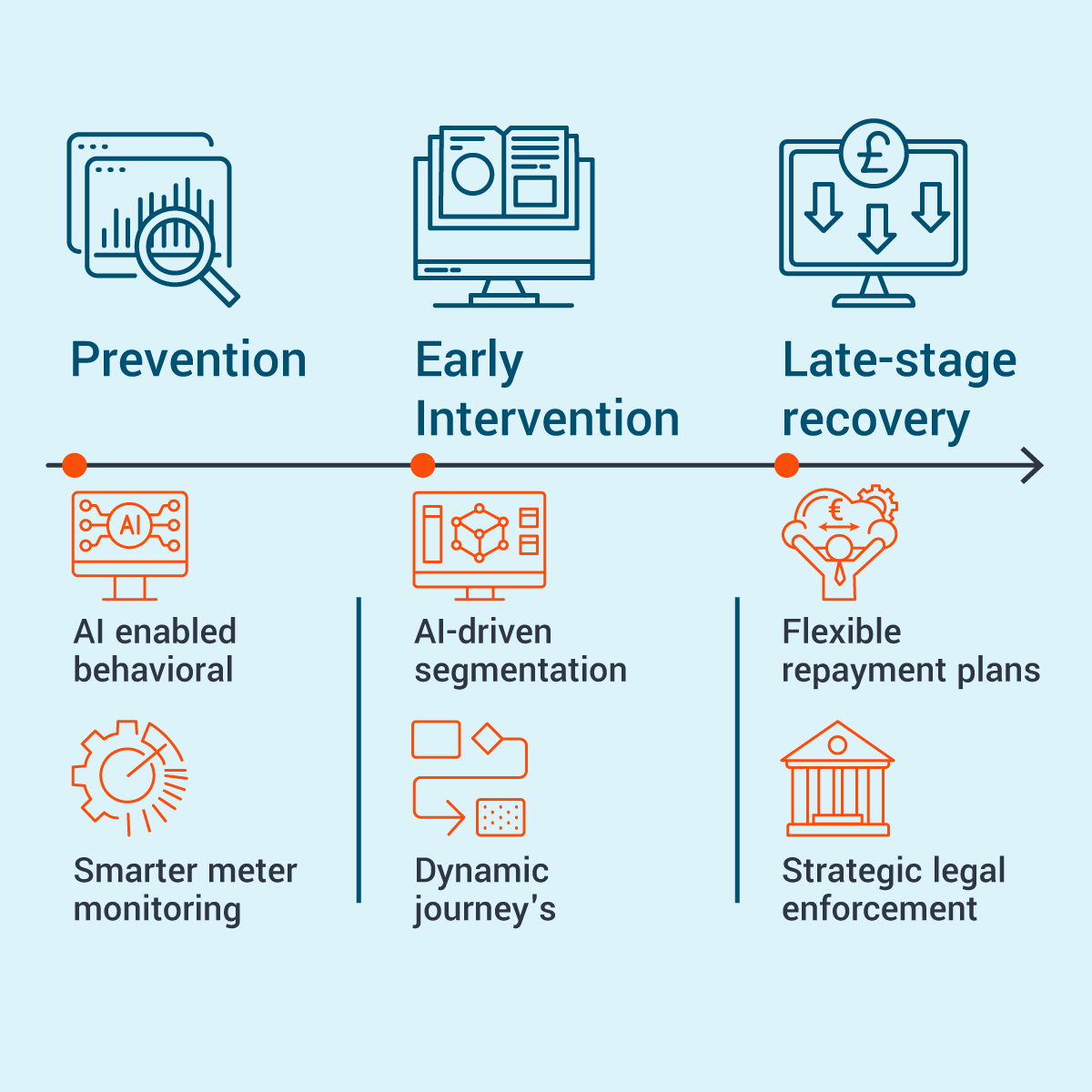
Managing aged debt requires a structured and measured approach. We provide frameworks for flexible repayment plans based on verified affordability data and optimized field operations. These processes prioritize home visits based on the probability of productive contact. Additionally, we address the strategic application of legal enforcement as a necessary final option.
Ready to transform your energy Debt Management strategy?
The £4.43 billion debt challenge can't be resolved with incremental updates to legacy systems. Suppliers that prioritize prevention, utilize intelligent segmentation, and support their agents with data-driven insights will likely recover more debt while rebuilding consumer trust.
Download the complete roadmap to access our full framework, which includes practical process maps, the five key success metrics used by leading suppliers, and technology recommendations aligned with Ofgem standards.
Frequently asked questions
UK household energy debt reached a record £4.43 billion in Q2 2025, up more than £750 million year on year. Of that total, £2.9 billion is owed by 2 million customers with no formal repayment arrangement, averaging £1,716 per account—a 42% rise since Q2 2023. More than six million UK households are now classified as living in fuel poverty.
Legacy, one-size-fits-all dunning processes were built for a different era. They apply fixed sequences regardless of individual circumstances, making it difficult to balance effective recovery with the empathy required at today's scale. As debt volumes rise and regulatory expectations tighten, a more intelligent, data-driven approach has become essential.
AI enables suppliers to identify financial risk before a first payment is missed. By combining payment histories, smart meter consumption data, and behavioural signals, AI-enabled scoring models flag households likely to fall into arrears. Suppliers can then offer proactive support, tailored payment methods, or adjusted tariffs at the earliest possible stage—well before debt accumulates.
Behavioural scoring is an AI-driven method of assessing a customer's likelihood of falling into arrears, based on patterns in payment history, energy usage, and engagement data. These scores allow suppliers to prioritise outreach and match each customer to the most appropriate intervention—from a digital reminder to a referral to a specialist vulnerability agent.
Smart meter data provides near-real-time visibility into consumption patterns, enabling earlier and more accurate identification of customers at risk. As of March 2024, 66% of domestic meters in Great Britain are smart, with 67% operating in smart mode. This data helps detect sudden usage spikes, identify billing errors, and trigger timely outreach that prevents bill shock and fictitious debt.
AI continuously monitors customer data and triggers personalised outreach the moment risk indicators appear. By integrating smart meter analytics, affordability scoring, and end-to-end workflow tracking, suppliers can act at the point of customer acquisition or at the first sign of financial strain—long before a formal arrears process is required.
Precision segmentation groups customers by their ability to pay, outstanding balance, and historical contactability, then routes each account to the intervention most likely to succeed. A customer who simply missed a deadline receives a digital prompt. A household in genuine hardship is prioritised for specialist agent support. The result is a more efficient use of resources and better outcomes for customers.
Dynamic omnichannel journeys replace fixed dunning sequences with communication strategies that adapt to individual behaviour. Using engagement data, suppliers determine the right channel—email, SMS, or digital self-service—the right tone, and the optimal moment to make contact. This personalised approach increases response rates and allows customers to arrange payments without waiting in call queues.
Workflow automation eliminates the data silos that prevent coordinated action on debt. Billing disputes, vulnerability indicators, and repayment updates are automatically routed to the correct internal teams, creating a single, real-time view of each customer. This reduces manual processing, accelerates resolution, and ensures every account is handled with the right information.
AI identifies risk early by combining smart meter data, payment history, and behavioural signals into a continuous scoring model. When risk rises, suppliers can offer proactive solutions—a switch to direct debit, a tailored tariff, or an early affordability conversation—before a household ever misses a payment.
Flexible repayment plans, grounded in verified affordability data, allow suppliers to offer instalment amounts and schedules that households in genuine hardship can realistically maintain. AI models recommend payment structures aligned with seasonal usage and individual budgets, supporting compliance with Ofgem's expectations and the Energy UK Vulnerability Commitment, while reducing the risk of customers falling deeper into arrears.